

Drywall repair can make a major difference in how clean, bright, and finished your home looks. Small dents, cracks, nail holes, and rough patches may seem minor, but they can stand out once light hits the wall. Damaged drywall can also make fresh paint look uneven. The right repair work can restore a smooth surface and help the whole room feel more polished.
Why Drywall Repair Matters for Home Appearance
Walls create the background for nearly every room in your home. If they are smooth and even, your paint, trim, cabinets, and decor can stand out for the right reasons. If the walls are damaged, the eye often goes straight to the flaw.
Drywall damage may include:
- Nail and screw holes
- Dents from furniture or daily use
- Cracks near doors or windows
- Loose tape at drywall seams
- Water-stained or soft areas
- Larger holes from repairs or remodeling
Fixing these problems can give the room a cleaner look without changing the entire space. Professional drywall repair is also useful before repainting because paint alone cannot hide deep dents, loose seams, or uneven patches.
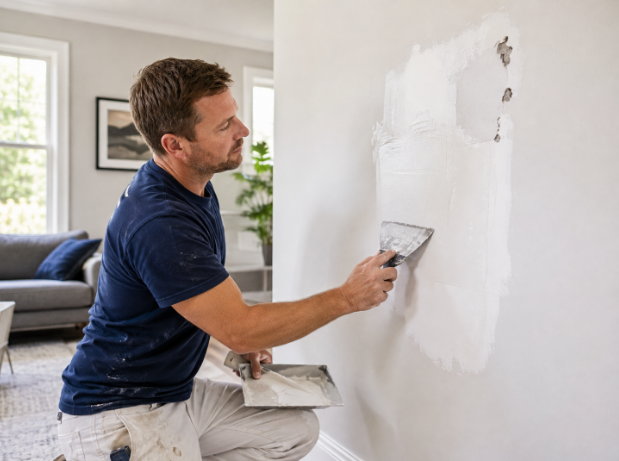
Drywall Repair Helps Paint Look Smoother
A good paint job starts with a smooth surface. If a wall has rough spots or old patch marks, fresh paint can make those flaws easier to see. Before painting, damaged sections should be patched, sanded, and prepared with care. The goal is to create a level surface that blends with the rest of the wall. This helps paint dry more evenly and gives the room a cleaner finish.
For larger updates, repaired walls can also pair well with new flooring when you want the whole room to feel refreshed.
Common Problems That Need Drywall Repair
Some wall damage is easy to spot, while other signs may be less obvious. A hairline crack may grow over time, and a soft spot may point to past moisture.
Watch for:
- Cracks that keep returning
- Bubbling or peeling paint
- Brown or yellow water stains
- Soft or swollen wall sections
- Visible drywall tape
- Uneven texture around old patches
Check for water damage before installing new drywall. Fix the source of the moisture first. Otherwise, the same damage may return.
How Drywall Repair Creates a Better Finish
Smooth drywall takes more than filling a hole. The repair must blend with the surrounding wall. That may involve removing damaged material, adding a patch, applying joint compound, sanding the area, and matching the wall texture.
A careful repair should leave the wall ready for primer and paint. The edges of the patch should fade into the existing surface instead of forming a raised ring or visible outline. Texture matching is also important. Orange peel, knockdown, and other wall textures each have a different look. A patch with the wrong texture can still stand out after painting. Good drywall repair focuses on both the damaged area and the wall’s final look.
Drywall Repair During a Home Remodel
Drywall work often becomes part of a larger remodeling project. Cabinets may be removed, plumbing may be moved, electrical work may require wall access, or old tile may leave damage behind. These changes can create holes or rough sections that need to be finished before the room is complete.
This matters in kitchens and bathrooms, where walls sit next to cabinets, counters, backsplashes, and other visible finishes. Clean wall surfaces help new materials look properly installed. If your project includes damaged or unfinished walls, professional drywall repair can help prepare the space for the next stage.
Small Drywall Repairs Can Have a Big Effect
You do not always need a major remodel to improve how a room looks. Repairing a few visible flaws may be enough to make the space feel cleaner and better cared for. A smooth wall can make trim lines look sharper, help artwork stand against a clean background, and stop old patches from drawing attention after repainting.
For homeowners getting ready to sell, wall repairs can also improve first impressions. Buyers may notice cracks, dents, or stains as signs that a home needs work. Clean walls can help rooms feel more move-in ready.

FAQ About Drywall Repair
Can small drywall holes be repaired?
Yes. Small holes from nails, screws, or minor impacts can usually be patched. The area should still be sanded and finished so the repair blends with the wall.
Should drywall be repaired before painting?
Yes. Paint does not fix dents, cracks, or uneven patches. Repairing and smoothing the wall first gives paint a better surface and a more even appearance.
Can damaged drywall texture be matched?
In many cases, yes. Matching the texture helps the repaired area blend with the rest of the wall. The method depends on the texture already in the room.
When should damaged drywall be replaced?
Replacement may be needed when drywall is badly broken, soft from moisture, or damaged across a large area. A professional can determine whether patching or replacing the section makes more sense.
Restore a Cleaner Look With Drywall Repair
Drywall repair is a simple way to improve walls that look worn, cracked, dented, or unfinished. Smooth surfaces help paint look better, support other remodeling work, and make rooms feel more complete. Addressing wall damage early can also keep small flaws from becoming larger visual problems.
For smooth, clean walls that fit the rest of your home update, contact Angel’s Pro Cabinetry to discuss your drywall repair needs. Explore more helpful ideas on our blog.
